

Quick Links
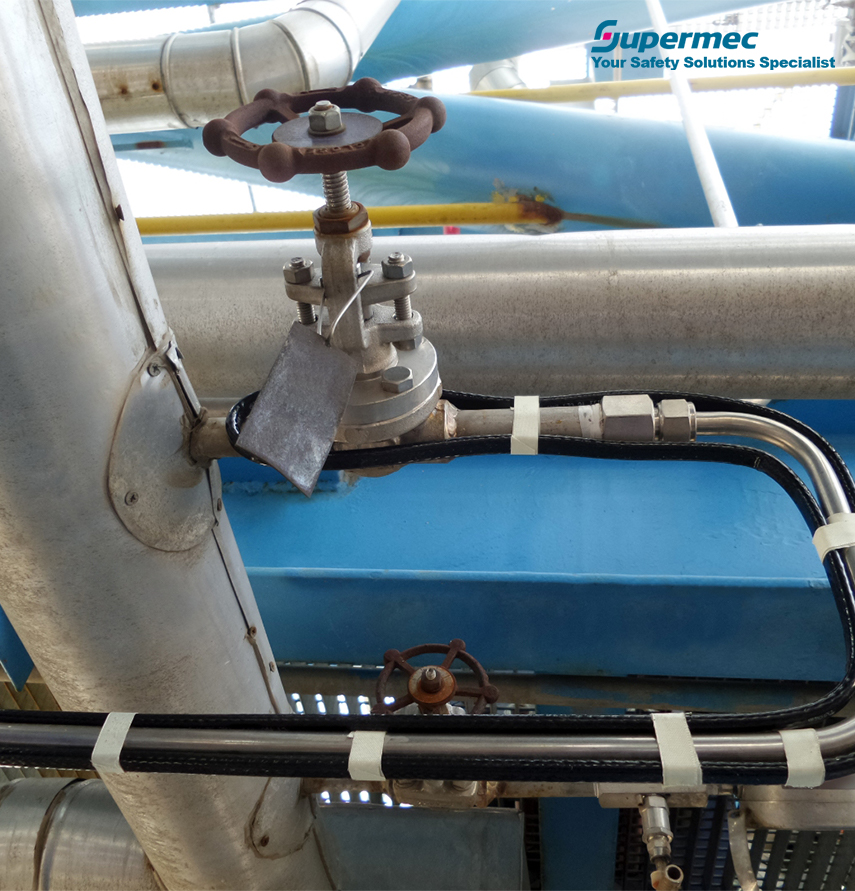
Heat-tracing cables are essential in industries where temperature maintenance and freeze protection are critical. These cables provide a reliable solution to prevent freezing and maintain consistent temperatures in various applications. However, there are different heat tracing cables available on the market. Each works differently, and the choice is influenced by its intended application.
So how do you know which heat tracing cable is ideal for your system? Fret not. Let us explore and compare the three primary types of heat tracing cables: power-limiting, constant-wattage, and self-regulating cables. Understanding their differences can help you make an informed decision when choosing the correct heat-tracing cable for your specific needs.
Learn More: What You Need To Know About Heat Tracing
1. Power-Limiting Heating Cables

Power-limiting cables utilize a coiled resistor alloy heating element enveloping two parallel conductors, with the spacing between contact points determining the heating zone's length. This design facilitates on-site customization by cutting and termination. Primarily, these cables regulate power consumption in response to ambient temperature changes.
As temperatures decrease, the heating element's resistance declines, elevating power output. Conversely, higher temperatures prompt increased resistance, imposing a cap on power output. This dynamic adjustment mechanism ensures efficient energy utilization across varying environmental conditions.
This feature allows the power-limiting cable to be overlapped once since the power output of the heating element is reduced at cross-over points. It also makes the cable more energy-efficient and can help prevent overheating.
2. Constant-Wattage Heating Cables

Constant-wattage heat tracing cables comprise multiple constant electric power zones, which are formed by wrapping a fine heating element around two insulated parallel bus wires. A notch is created in the insulation on the opposing sides of the conductors, and a small heating circuit is then produced by fusing the heating element to the exposed conductor wire. This setup is repeated throughout the entire cable, creating the power zones. There is also an inner jacket separating the grounding braid from the bus wires.
These cables offer consistent and uniform heat output across various applications, making them ideal for scenarios requiring precise heat distribution. Their constant power rating per unit length ensures a steady wattage output irrespective of ambient temperature fluctuations. However, this reliability comes at the cost of energy efficiency, as they consume a fixed amount of power, unlike other heat-tracing cables.
Despite their energy consumption drawback, constant-wattage cables boast several advantages. Their parallel circuit design permits on-site customization by cutting to desired lengths, enhancing installation flexibility. Additionally, users can connect multiple constant-wattage heating tapes using trace heating junction boxes or jointing kits, further enhancing versatility. However, it's crucial to avoid crossing these cables over themselves to prevent overheating and potential burnout.
In summary, constant-wattage cables offer consistent and uniform heat distribution, making them suitable for applications requiring precise heat output. While they may not be as energy-efficient as other heat-tracing cables, their flexibility in installation and connectivity options adds to their appeal. Careful handling and installation are necessary to maximize their performance and prevent overheating issues.
3. Self-Regulating Heating Cables

Self-regulating heating cables are the most forgiving of all existing heat-tracing technologies. These cables’ unique conductive polymer core allows them to adjust their heat output based on the ambient temperature. As the temperature surrounding the cable drops, the conductive core contracts on a microscopical level. This change decreases the electrical resistance and creates numerous electrical paths between the conductors, causing the current to flow along these paths and warm the core.
Additionally, they require higher-rated contactors due to high inrush currents during startup. While not as reliable as constant-wattage cables, self-regulating cables provide safe and adaptable heat tracing solutions for diverse applications, prioritizing safety in potentially dangerous settings.
Each type of heat-tracing cable has its strengths and is suitable for different scenarios. As a result, choosing your ideal heat-tracing technology depends on various factors. If you are unsure where to begin, do not hesitate to approach our friendly staff at Supermec for assistance. We have a comprehensive range of Raychem heat-tracing cables available at affordable prices. So you are guaranteed to find one that matches your requirements. Contact us today to learn more about our products.
Back