

Quick Links

Are you suffering from busted pipes or frozen surfaces? Such problems are common for businesses operating in the winter season. To combat these situations, entrepreneurs have relied on heat tracing systems to maintain the temperature of their pipelines and vessels.
In fact, this system can be used in various industries, including oil and gas, chemical processing, food and beverage, and power generation. If you are interested to learn more about heat tracing and how it works, continue reading on.
What is heat tracing?
Heat tracing is a process that involves adding a heat source to a pipeline or vessel to maintain the temperature of the contents. Doing so helps prevent freezing, thus maintaining the flow of viscous materials like oil, chemical, and specific food products. Heat tracing can be achieved using various methods, such as electric heat tracing, steam tracing, and hot water tracing. Although electric heat tracing is the most common method used today...
How does electric heat tracing work?

You might be curious about how electric heat tracing operates as it's the most widely used heat trace technique used in a variety of sectors nowadays. In order to deliver heat and regulate the temperature of the pipes, this procedure entails attaching the heating cable across the pipeline or vessel using glass tapes made specifically for heat tracing.
The heat tracing cables generate heat because they are driven by electricity. Furthermore, a temperature control device that keeps track of the temperature of the contents in the pipeline or vessel can be used to turn them on or off. The gadget activates the heat tracing cables to provide heat to the contents of the pipeline or vessel if the temperature drops below a predetermined level.
Learn More: What are the Applications of Electrical Heat Tracing?
Common uses for heat tracing
During winter, pipes transporting liquid substances are at risk of freezing and increased viscosity. As a result, heat trace systems are commonly used to safeguard them from freeze damage. Another benefit of using heat tracing is that it allows for optimal control of the flow and viscosity of the liquid, allowing businesses to regulate the temperatures within their pipes, thus enhancing and streaming their operations.
There are various other uses for heat tracing beyond protecting pipes from freezing. They include:
- Snow melt systems;
- Safeguarding tank contents from freezing;
- Helping instruments continue operating in more favorable ambient conditions.
Why you should consider a self-regulating heat trace system
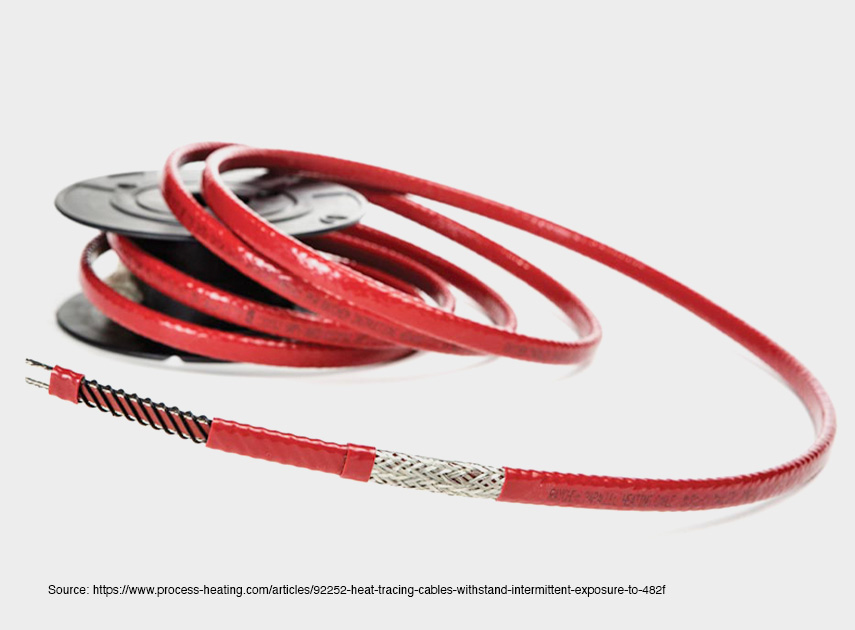
Before choosing an electric heat trace system, you should understand the difference between constant wattage heat trace and self-regulating heat trace. With a constant wattage heating cable, uniform, unchanging heat is delivered throughout the system regardless of the ambient temperature.
Self-regulating heating cables automatically adjust their heat output based on the temperature of the surrounding environment--a hotter surface means a lower wattage output, and a colder surface will cause more wattage to be generated. So why should you opt for self-regulating heating cables? Because they require less maintenance and are more energy-efficient than other heating cables, self-regulating cables can be overlapped on top of one another without risk of overheating since the temperature is self-regulated by these devices.
In contrast, constant-wattage heating cables may overheat when they are overlapped because they produce too much heat for themselves due to being continuously exposed to high temperatures in different places throughout the house .As a result, it will develop a hot spot and burn out, causing damage to the pipeline or vessel.
How long do heat tracing cables last?
The lifespan of heat tracing cables depends on several factors, such as the type of cable, the environment, and maintenance. With that said, three to five years is a fairly common lifespan. While heat tracing cables may continue to produce heat, the output may reduce over time, increasing the risk of potential failure. So let us share a few helpful tips for prolonging the lifespan of your heat trace system:
- Ensure your insulated jacket is well-fitted and efficient, with no holes or gaps present. A loose insulated jacket will require more power output to heat the piping, increasing the workload of the cables.
- Check the manufacturer’s instructions and ensure the heat trace system is correctly installed.
- Invest in thermostats and controllers. Even self-regulating heat trace systems require monitoring, as they do not turn themselves on or off automatically.
- Conduct regular maintenance to ensure the cables are functioning correctly.
Now that you better understand heat tracing and its importance, you are undoubtedly eager to begin your search for your ideal system. Fortunately, you do not have to look far. At Supermec, we offer a comprehensive selection of heat tracing cables, including Raychem heat tracing cables and power limiting cables. Do not hesitate to contact us today for your heat tracing needs.
Back